DFW · Austin · San Antonio
Permanent LED Light Installation in Texas
Installed once behind your roofline. Warm white, holiday colors, game-day palettes — all on tap, all year.
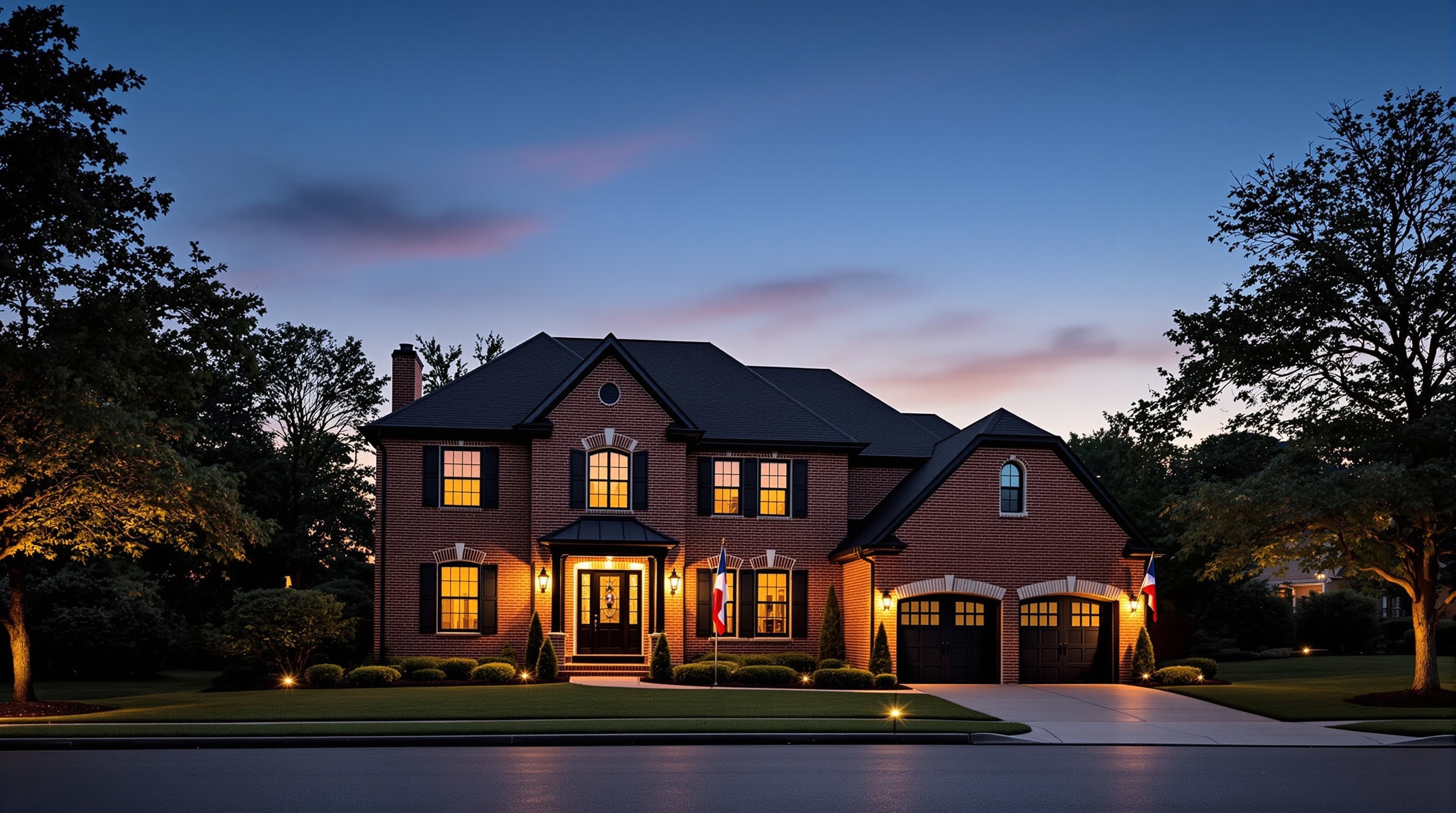
Permanent LED light installation means exactly what it sounds like. A professional installer mounts a thin aluminum channel along your roofline, color-matched to your fascia. Commercial-grade LED bulbs sit inside the channel. The whole system is controlled from an app on your phone, powered by low-voltage wiring, and covered by a lifetime product warranty. It stays on your house year-round — invisible during the day, ready at night.
A typical single-story Texas home — around 150 to 250 linear feet of roofline — runs $2,500 to $5,500 installed. Larger or multi-story homes run $6,000 to $12,000 or more. The cost calculator below gives you a real range for your home before we ever talk. Installed once. No more ladders in November. No more tangled strands in the attic. And your Cowboys-blue roofline on Sunday is just one tap away.
What it is
A permanent LED system, demystified
Permanent LED light installation is a category that barely existed ten years ago. It grew out of two things getting better at the same time: LED bulbs that could finally survive outdoor Texas weather, and powder-coated aluminum extrusions cheap enough to install residentially. Put the two together and you get a system you can mount once, power from a small transformer in your garage, and never touch again.
Mechanically, the system is four parts. First, the channel — a thin aluminum track that runs along your fascia behind the gutter line, color-matched so you cannot see it from the curb. Second, the bulbs — commercial-grade LEDs rated for 50,000 hours of operation. Third, the low-voltage wiring that snakes from the channel down to a small transformer box. Fourth, the smart controller and app that let you pick colors, patterns, and schedules.
It replaces three different things in a homeowner's life at once. It replaces the temporary Christmas lights that come out every November and go back in January. It replaces the landscape accent lights that never quite lit the second story the way you wanted. And for a lot of homes, it replaces the floodlights whose yellow color temperature made your house look jaundiced at night. One system does the job of all three — and looks like none of them during the day.
Why it matters
The annual ladder routine is a worse deal than it looks.
If you already put up temporary Christmas lights, you know the real cost is not the strand. It is the time. Two Saturdays in November stringing them up and testing dead sections. An hour every weekend through January keeping them running. A weekend taking them down. And a shelf in your garage where the tangled mess lives for ten months.
Add up the hourly cost of your time, replacement strands every two or three years, storage bins, extension cords, timer boxes, and the occasional rented ladder or injured back, and a family that takes the holiday seriously is spending $300 to $600 a year plus 20 to 40 hours of labor — forever. Over fifteen years, that is $4,500 to $9,000 in materials alone, and somewhere between 300 and 600 hours of weekends you will not get back.
A permanent system is more expensive upfront and radically cheaper in every year after the first. It is also vastly more capable — 16 million color options instead of "multi-color" or "warm white," programmable patterns instead of on/off, and a reliable 27-plus-year bulb lifespan instead of annual replacement. The ceiling is so much higher that comparing them on price alone misses the point. The point is that the temporary version has always been the expensive one. The permanent version is what the calculation actually says you should do.
What goes on your house
Commercial-grade — because residential-grade is why temporary lights fail.
The channel is extruded 6063-T5 aluminum, powder-coated to match your fascia (we stock black, white, bronze, cream, and custom color match for anything else). It is not glued. It is mechanically fastened at specific points with stainless fasteners into solid wood. It does not peel off in a hailstorm. It does not sag in the heat. It handles thermal expansion because aluminum is what aluminum is.
The bulbs are 0.6-watt commercial LEDs, rated for 50,000 hours of operation and IP65-rated for outdoor weather exposure. That is the same rating used on restaurant patios and commercial signage — not the residential-grade rating that big-box Christmas strands carry. At five hours of nightly use, 50,000 hours is more than 27 years. In practice, most failures we see are from storm damage to individual bulbs, which are replaceable individually in under a minute.
The wiring is 12-volt low-voltage, which matters for three reasons: it is safe to touch if a bulb is ever damaged, it cannot start a fire, and it does not require an electrician for repairs. Power comes from a small transformer box that tucks into your garage or an exterior-rated box under an eave. The smart controller lives next to the transformer, speaks to your WiFi, and runs the app you use from your phone.
How it works
Four steps. One day. Every night after that.
- 01
Free on-site measurement
We come to your home, measure your roofline, review the architecture, and give you an exact quote — scoped to your home, not a ballpark from a spreadsheet.
- 02
Approval + HOA submission
Once you sign off, we prepare any HOA architectural review materials your neighborhood needs. Most Texas HOAs approve permanent LED systems on first submission.
- 03
Installation (typically one day)
The color-matched aluminum channel is installed behind your gutter line. Bulbs go inside the channel. Wiring runs clean. Most single-story Texas homes are done in a single day.
- 04
Activate your lights from your phone
We walk you through the app, set up your favorite presets, and hand off the system. Cowboys blue, warm white, holiday colors — all on tap from your couch.
Honest pricing
What would my home cost?
Adjust the sliders. See a real range. Then get a real quote.
A typical 2,400 sq ft single-story home has about 180 ft. A 5,500 sq ft estate closer to 400 ft.
Estimated install
Final quote after on-site measurement.
- Bulbs installed
- 540
- Annual electric cost
- ~$89/yr
The economics
What the numbers actually look like.
A typical Texas single-story home has 150 to 250 linear feet of roofline. At our base rate of $22 per linear foot for a standard single-story install, that works out to $3,300 to $5,500 before complexity adjustments. The cost calculator on this page scales the number honestly — larger homes, more stories, dormers, and complex architectural features all push the price up. A 6,000 square foot Southlake estate on a complex roofline often lands between $10,000 and $16,000. We would rather you see that number on the calculator than be shocked by it on a quote.
Operating cost is where the math surprises people. A typical install of roughly 540 bulbs running five hours a night draws about $18 to $30 per year in electricity at Texas residential rates. That is less than a single month of your HVAC in August. Over the lifespan of the system, the electric bill is a rounding error.
Against the temporary-lights alternative, the payback math is honest. Year one, you are underwater because you paid upfront. By year four, you have broken even against the cost of strands, storage, and labor. Every year after that is pure win — and every November, you save the weekend.
How we stack up
Lonestar Glow vs. the alternatives
| Feature | Lonestar Glow | Trimlight | JellyFish | Govee | Temporary lights |
|---|---|---|---|---|---|
| Stays up year-round | ✓ | ✓ | ✓ | ✓ | — |
| Invisible during the day | ✓ | ✓ | ✓ | Partially | — |
| 16+ million colors | ✓ | ✓ | ✓ | ✓ | — |
| App-controlled | ✓ | ✓ | ✓ | ✓ | — |
| Commercial-grade channel | ✓ | ✓ | ✓ | — | — |
| Professional installation | ✓ | ✓ | ✓ | — | — |
| Lifetime product warranty | ✓ | ✓ | ✓ | 1 year | — |
| Local Texas team | ✓ | Franchise | Franchise | — | — |
| Honest upfront pricing on site | ✓ | — | — | ✓ | ✓ |
Why Texas specifically
Built for the weather, the HOAs, and the neighborhoods.
Texas outdoor electronics live a hard life. Summer heat bakes weak adhesives. Spring hail punishes any clip that is not seated flush. The February 2021 ice storm turned an entire generation of big-box clip-on lights into brittle plastic confetti across the state. Anything that survived all three was commercial-grade — and that is the only grade we install. The manufacturer warranty on the channel and bulbs runs lifetime, and we back our workmanship on top of that in writing.
Texas HOAs are the other half of the story. Most of the neighborhoods our customers live in — Plano, Frisco, Southlake, Westlake Hills, Fair Oaks Ranch, Stone Oak — require architectural review for any permanent exterior modification. We have written dozens of these submissions. The color-matched channel is what wins approval: because the system is invisible from the curb during the day, most HOAs treat it as cosmetically equivalent to the existing fascia. If your HOA needs a submission, we will prepare it for you at no additional cost.
Finally, the cultural thing. Texas takes home presentation seriously in a way that is specific to Texas. The neighborhoods we serve host more street-level holiday lighting, more game-day displays, more block parties, and more casual drive-bys during the holidays than most of the country. The permanent system exists because this audience — you — was the audience that demanded something better than a ladder on the roof.
Where we work
Genuinely local on every street.
Related services
Learn more
Guides that help you decide.
The real pricing formula for Texas homes.
The financial case, the time case, and honest exceptions.
Every dimension compared side by side.
Three brands, honest verdict.
Different products at different quality levels.
50,000 hours rated. Here's the real-world picture.
Permanent LED Light Installation in Texas — the questions we get asked
A typical single-story home with 150–250 linear feet of roofline runs $2,500–$5,500 installed. Two-story homes typically run $4,500–$8,500. Large estates with complex rooflines (Southlake, Westlake Hills, Fair Oaks Ranch) can run $10,000–$16,000+. The cost calculator on this page gives you a real range based on your home's specifics. Final quotes are always done after an on-site measurement.
No. The aluminum channel is color-matched to your fascia — we stock black, white, bronze, cream, and custom colors — and mounted behind the gutter line. From the curb, the roofline looks exactly the way it did before we installed. The only giveaway is a very slight recess in the fascia line that you would only notice if you were inspecting the house from ten feet away with the intent of finding the channel.
Bulbs are rated for 50,000 hours — that's over 27 years at five hours of nightly use. In practice, the most common failure mode is storm damage to individual bulbs, which are replaceable individually in under a minute. The channel is powder-coated aluminum with no meaningful wear mechanism. We install the whole system with a lifetime product warranty from the manufacturer and a workmanship guarantee from us in writing.
Very little. Each bulb draws 0.6 watts. A typical install of 540 bulbs running five hours a night costs about $18–$30 per year in electricity at current Texas rates. That is one or two dollars a month — cheaper than most phone chargers left plugged in.
Yes. The controller has an RF remote for manual control if your WiFi is down. You can also set schedules directly on the controller box, which persists through network outages. Most homeowners only use the app because it is easier, but the system does not require an always-on internet connection to run.
Individual bulbs are replaceable without removing the channel or disturbing the rest of the string. You can replace one yourself in under a minute with a replacement bulb we ship you, or we'll come out and do it under the workmanship warranty. Because the bulbs are 50,000-hour commercial grade, the most common cause of replacement is a direct hit from hail.
Constantly. Most of the neighborhoods we serve are HOA-governed, and we've prepared architectural review submissions many times. The color-matched channel is what wins approval — because the system is invisible during the day, most HOAs treat it as a cosmetic equivalent to existing fascia. If your HOA needs a packet, we'll prepare it at no additional cost.
Most single-story Texas homes are installed in a single day. Larger or multi-story homes take one to two days. We schedule around weather and your availability, and we never leave a job half-finished — once we start, we finish before we leave.
Ready for your free quote?
Free on-site measurement. Exact quote back to you within 24 hours.