How Much Do Permanent LED Lights Cost in Texas? (2026 Cost Guide)
A typical single-story Texas home runs $2,500–$5,500 installed. Larger or multi-story homes run $6,000–$12,000+. Here's exactly how the math works, what drives the final number, and how to read a quote.
Most companies in this category make you fill out a form to find out if your house is $3,000 or $30,000. That's annoying, and at this price point it's also distrusting. We're going to do the opposite — publish the formula, explain every number, and give you a calculator that scales honestly with your home.
Permanent LED light installation is a real investment. It's more expensive than temporary Christmas lights and less expensive than replacing your roof. It falls squarely in the category of home upgrades you pay for once and benefit from for decades. Before you call anyone, here's what you should know about what actually drives the cost.
What permanent LED lights cost in Texas
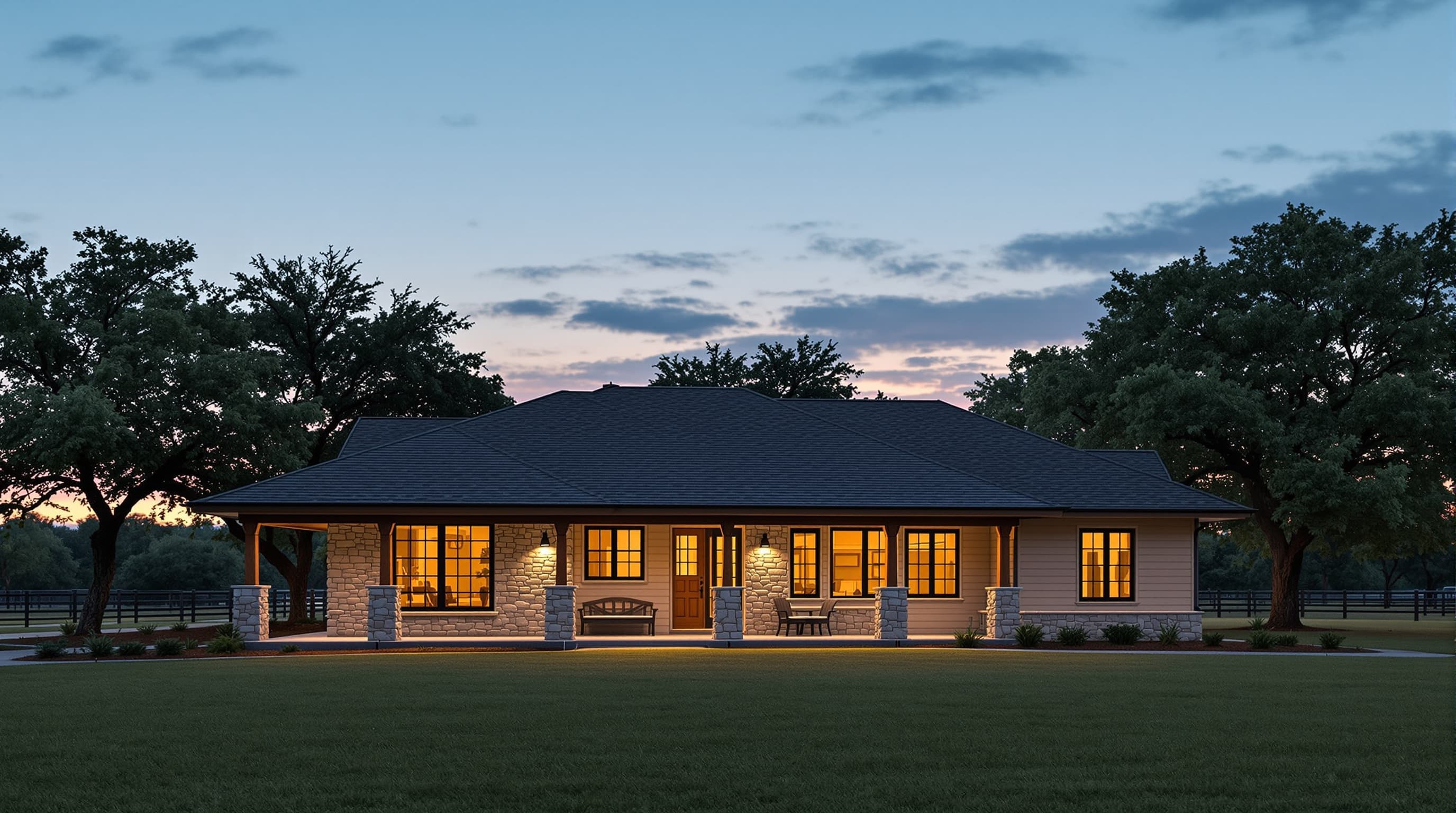
Let's start with the numbers, scoped by home size and shape. These are the ranges we quote most often across DFW, Austin, and San Antonio in 2026.
| Home profile | Linear feet of roofline | Typical installed price |
|---|---|---|
| Small single-story (1,800–2,400 sq ft) | 150–200 ft | $2,500–$4,400 |
| Larger single-story (2,400–3,500 sq ft) | 200–280 ft | $4,400–$6,200 |
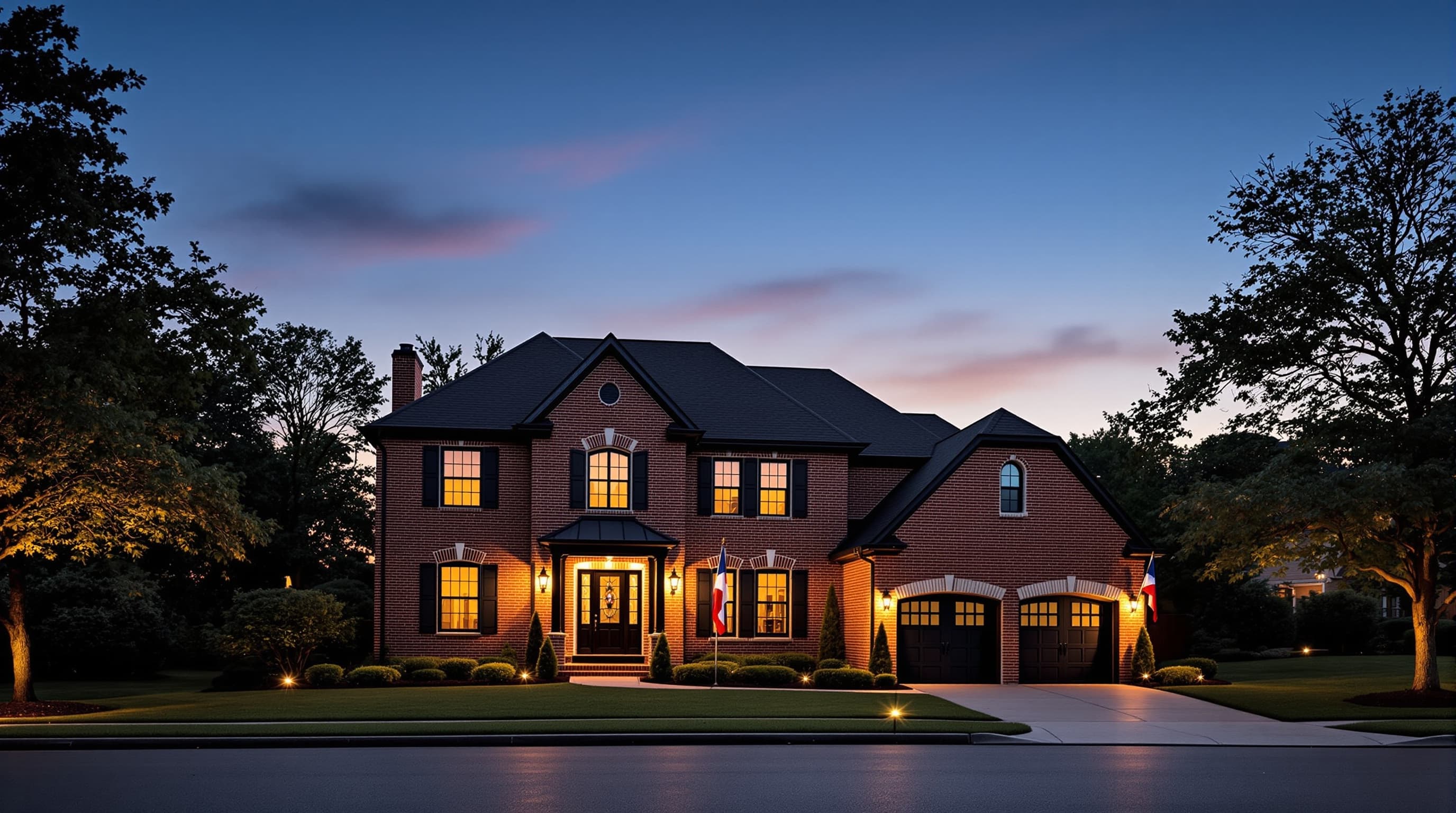
| Two-story suburban (3,500–5,000 sq ft) | 250–400 ft | $5,500–$9,500 |
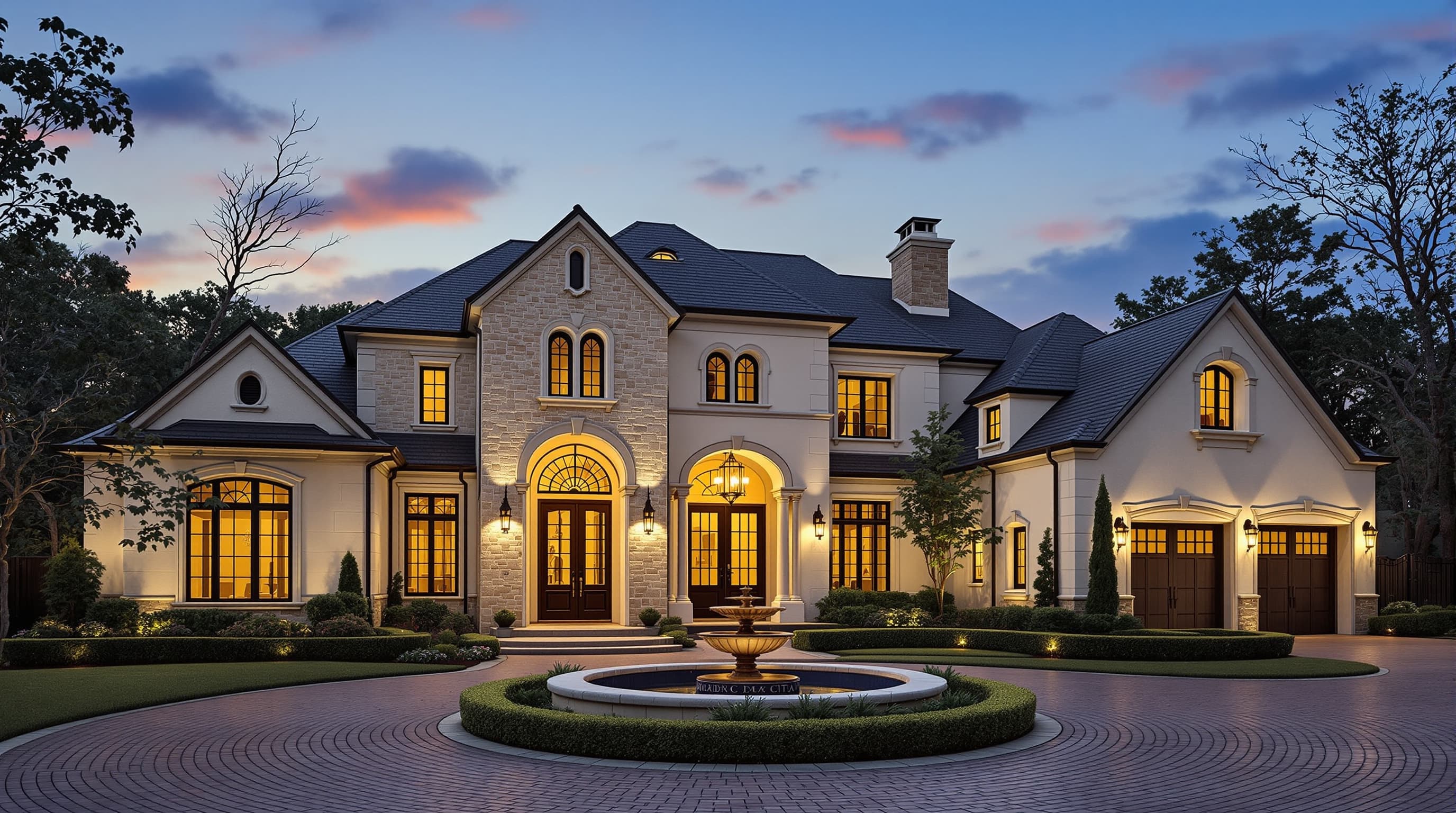
| Luxury estate (5,000–8,000 sq ft) | 400–600 ft | $9,500–$16,000 |
| Grand estate or complex build | 600+ ft | $16,000+ |
Notice what these ranges have in common: every single one is tied to a specific profile. We never publish a bare "$2,500–$5,500" figure without the footnote that it's for a typical single-story home. Anyone who gives you a range without qualifying the home size is either being careless or intentionally vague.
The formula we actually use
The price isn't a dart board. Our pricing formula has four inputs, each of which scales the base rate up or down. Here's the math, in plain English.
1. Linear feet of roofline × base per-foot rate
Every install starts with how much fascia we're actually lighting. We walk your roof and measure the exact linear footage of every edge where a permanent LED channel will go. That number, multiplied by our base per-foot rate of $22, gives the starting point.
A typical suburban home has 150–250 feet. A large estate can have 500+. The jump isn't linear to square footage — a 3,500 sq ft ranch has less roofline than a 2,800 sq ft two-story with a complicated roof, because vertical height stacks the footprint.
2. Story multiplier
Two-story installs aren't twice the cost of single-story, but they're meaningfully more. Extra ladder time, longer runs, more safety equipment, and the extra care needed at second-story eaves all push the labor up. Our multiplier:
- Single-story: ×1.0 (base)
- Two-story: ×1.35
- Three-story or more: ×1.7
3. Complexity multiplier
A simple gable roof with two peaks is cheap. A cross-gable with four dormers, multiple pitches, and architectural features takes longer to measure, plan, cut, and install. Our three tiers:
- Standard: Simple gables, straightforward runs → ×1.0
- Complex: Dormers, multiple peaks, minor turrets → ×1.25
- Intricate: Architectural features, cupolas, tight detail work → ×1.5
4. City premium
Labor costs more in some Texas submarkets than others. The premium reflects local wage rates, permit and inspection overhead, and, honestly, the fact that homeowners in these neighborhoods expect a higher level of finish and communication. We bake it into the number up front:
- Standard submarkets: no premium
- Southlake, Westlake Hills: +15%
- Fair Oaks Ranch: +10%
Everywhere else — Plano, Frisco, McKinney, Round Rock, Cedar Park, Boerne, Stone Oak — runs at the base rate.
Run the numbers for your actual home
Don't guess. The calculator below implements the exact formula above. Drag the linear feet slider to where you think your home sits, pick the number of stories and the complexity, and you'll see a real range instantly. The output is the band we'd most likely quote you after an on-site measurement.
Honest pricing
What would my home cost?
Adjust the sliders. See a real range. Then get a real quote.
A typical 2,400 sq ft single-story home has about 180 ft. A 5,500 sq ft estate closer to 400 ft.
Estimated install
Final quote after on-site measurement.
- Bulbs installed
- 540
- Annual electric cost
- ~$89/yr
The calculator rounds to the nearest $50 and applies an 18% plus-or-minus band because we can't see your specific roofline from here. Actual quotes after measurement are usually within 5% of the midpoint. You'll never be shocked.
What you're paying for (and where the money goes)
Zoom in on a typical $4,500 single-story install. Where does the money actually go?
| Line item | Share | What it is |
|---|---|---|
| Aluminum channel | ~25% | Extruded 6063-T5 aluminum, powder-coated to match your fascia. Mechanically fastened, not glued. |
| Commercial LED bulbs | ~20% | 0.6W IP65-rated individually addressable LEDs, 50,000-hour lifespan. |
| Controller + transformer | ~8% | Low-voltage transformer + smart controller that speaks to the app on your phone. |
| Installation labor | ~35% | Licensed crew, typically one to two days on site. Ladder work, cutting, fitting, wiring, testing. |
| Overhead, insurance, warranty | ~12% | Licensing, general liability insurance, the workmanship guarantee, and service on issues after install. |
The shares shift a little on bigger jobs — labor goes up, channel and bulbs proportionally drop — but the ratios are close to right for most Texas homes.
Operating cost: what it costs to run the lights
This is where the math surprises people. Each bulb draws 0.6 watts. A typical single-story install of roughly 540 bulbs running five hours a night costs about $18 to $30 per year in electricity at current Texas residential rates.
That's cheaper than a single month of your HVAC in August. Over the system's lifetime, the electric bill is a rounding error. Nobody who installs these calls back about their electric bill.
The math against temporary Christmas lights
Permanent LED lights look expensive next to a Home Depot strand. They look radically cheaper over fifteen years. Here's how the math plays out against the temporary-lights alternative.
| Over 15 years | Temporary Christmas lights | Permanent LED system |
|---|---|---|
| Upfront cost | $0 | $4,500 |
| Replacement strands (every 2–3 yrs) | $1,500–$3,000 | $0 |
| Storage bins, timers, extension cords | $400–$800 | $0 |
| Annual labor (DIY, 20–40 hrs/yr) | 300–600 hours | 0 hours |
| Electricity (season) | $300–$750 | $270–$450 |
| 15-year total | $2,200–$4,550 + ~450 hrs | $4,770–$4,950 |
The hours are the part most people under-weight. If you value your weekends at even $25 an hour, the labor line alone is $11,250 over 15 years. Add that and the permanent system is the cheaper option in dollars and time.
There's also a quality ceiling that temporary strands can't clear at any price. The permanent system produces 16 million colors on-demand, programmable patterns, automatic schedules, and a finish you can't get from a big-box box of strands. The temporary version will never catch up.
What's included in a typical quote
Every Lonestar Glow quote includes, in writing:
- Site measurement and design. We come to your home, measure your exact linear footage, and produce a plan you sign off on before anything is ordered.
- All hardware: channel, bulbs, wiring, transformer, controller, mounting hardware, weatherproof connectors.
- Installation by a licensed crew. Not a sub-contracted day laborer who shows up once.
- HOA submission if your neighborhood requires architectural review — at no additional charge.
- App setup and walk-through. We don't leave until you know how to use it.
- Lifetime product warranty + workmanship guarantee, in writing.
What isn't typically included:
- Electrical work if your install requires a new outdoor outlet (rare but possible on older homes — we flag this during the site visit).
- Painting or repairing damaged fascia — we don't fix your fascia, but we'll tell you if it needs attention before we install.
- Home integrations beyond the included Wi-Fi controller. We do not wire into your alarm panel, smart home hub, or commercial BMS.
How to save money without skimping
There are legitimate ways to lower the final number without compromising the install:
- Book in the off-season. May through July is our quiet window. Because we're not fighting holiday booking pressure, scheduling is easier and we can be a little more flexible on the final number. Same hardware, same install quality.
- Consider just the front. Some homeowners only want the street-facing portion of the roof done. It's not how we usually spec, but it can cut the footage meaningfully. Ask about a "front-only" option during your site visit.
- Skip the cupola. If your home has an ornamental tower or cupola that's expensive to access, ask whether excluding it makes sense. Most people don't notice, and it can save $500–$1,500 depending on the feature.
- Use financing if the cash timing is the real issue. We offer financing with fair rates through third-party lenders. If the total makes sense but the upfront doesn't, a 12-month same-as-cash plan often solves it.
Red flags to watch for in a cheap quote
Not all low prices are a good deal. A few things to double-check before you commit:
- "Clip-on" or "glue-down" channel. If the quote mentions any kind of adhesive or pressure-fit mounting, it's not permanent. It will peel off in the first hot summer. Permanent means mechanically fastened.
- Residential-grade bulbs. Ask the rated bulb lifespan. If it's anything less than 50,000 hours, they're residential-grade and will fade or fail early under Texas sun.
- No lifetime warranty. If the hardware warranty is less than lifetime or the workmanship guarantee isn't in writing, you're buying a time-bomb.
- No physical address. A contractor with a PO box and a Google Voice number will not be around when a bulb fails.
- Cash only or a huge upfront deposit. A deposit is normal. 100% upfront is not. Anyone demanding the full amount before install is a red flag.
Getting an exact number for your home
The calculator on this page gets you to within a quote band. For the exact number, you need an on-site measurement. That's free, it's non-binding, and it's usually scheduled inside a week across our core DFW, Austin, and San Antonio markets.
During the visit, we walk your roofline with a laser measuring tool, photograph the architecture, talk through color options and control preferences, and send you an exact quote in writing inside 24 hours. You're free to shop it around. We don't do high-pressure sales. The honest pricing on this page is the same honest approach you get in person.
Ready to find out what your actual home costs? Request your free on-site measurement. Or give us a call — we answer the phone.
Related guides
- Are Permanent LED Lights Worth It? — the financial case, the time case, and when they're not.
- Permanent vs. Temporary Christmas Lights — every dimension compared side by side.
- How Long Do Permanent LED Lights Last? — 50,000 hours rated, here's the real-world picture.
- DIY vs. Professional Installation — Govee kits vs professional-grade systems, compared honestly.